By Fred I. Greenstein, published in 1982.
This is another book from the Reagan era, my second in two weeks. While Eisenhower was considered during his Presidency (1953-60) by critics and most Americans to be a weak President, basically riding out his fame as a WWII General who spent his Presidency playing golf, he is now recognized by historians as a strong, popular leader who got other people to do what he wanted without attracting controversy. I perked up at this! We have a lot to learn about electing leaders who are quiet and self-effacing but nonetheless achieve their goals by getting things done through co-operation with others. After looking at this picture, how can you not like Ike?
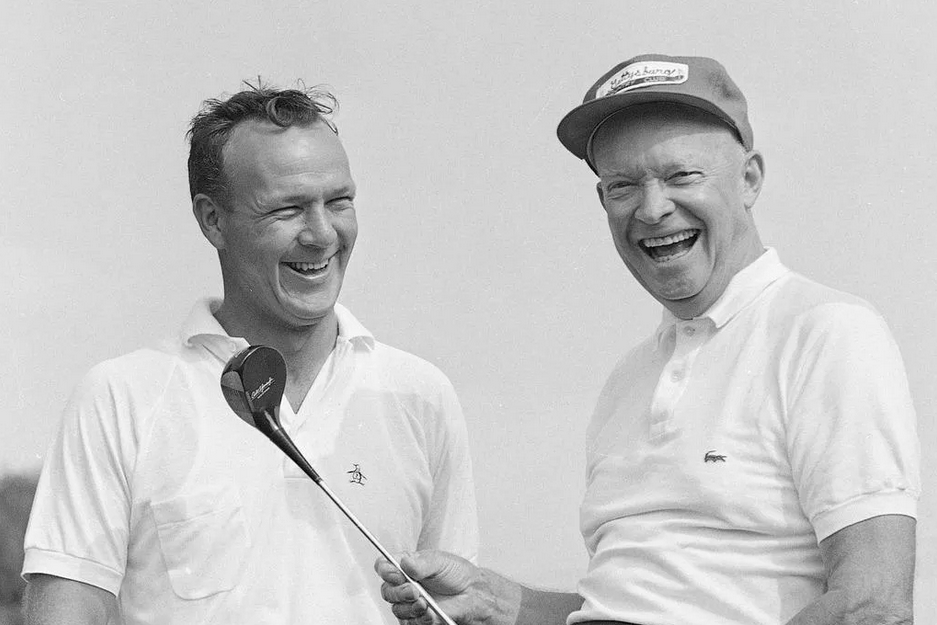
Here is a quote from James Reston, NY Times columnist, printed in September 1955 about President Eisenhower: “He is, indeed, a symbol of the atmosphere of the time: optimistic, prosperous, escapist, pragmatic, friendly, attentive in moments of crisis and comparatively inattentive the rest of the time.” (I added the emphasis.)
And just a few months later, here is another quote from the Times and Mr. Reston. This one is a response to an article that had just been published in Life Magazine where Secretary of State Dulles speculated whether Ike would launch a nuclear war against China without informing Congress. Reston writes: “The President was ill-informed about the Life article. Every Ambassador in the capital was waiting to hear whether he actually had “decided” to order a limited atomic war under certain circumstances in Manchuria and South China without informing the Congress or his allies. He did not answer the question. In fact, he admitted that he hadn’t even read the article. This made him probably the only world statesman who hadn’t read it, but at least it was an honest answer.”
Again, the emphasis is mine. Based on what was in this book, he certainly had read the article, but was choosing to give a non-controversial (and non-partisan) answer.

The book sets the stage by saying that in many other western countries there are two distinct positions: the first is Head of State (often the King or Queen) who needs to represent all the people and perform the ceremonial roles that unite the people. Second is a distinctly separate Prime Minister, who needs to make hard decisions that often cause him to be unpopular, especially since he/she has to do this through the lens of the political party that he/she was a member of. In the US, both these roles are combined into the Presidency. This makes the job nearly impossible to pull off. It would seem that being effective at harnessing the Federal system to pass laws and to achieve your goals would require leaning on partisan support, which by its very nature would be divisive with the general population.
Eisenhower found a way around this paradox.
He was able to perform the ceremonial part in public, while executing the partisan part in private, among his inner circle. He developed a public persona that often came across as uninformed, sometimes confused, and not in control. This was at odds with the way he dealt with his most trusted advisors, who saw that he had very specific and detailed ideas about policies, was well informed, and was astute about how to get others to accomplish his goals. He would dispatch his allies in Congress as well as his Cabinet and staff to plant seeds that grew into the fulfillment of his goals. This strategy was quite intentional; in order to maintain the support of the public, he would present himself as a non-confrontational hands-off administrator.
I think a bit of background would be helpful at this point. Bear with me! Born in 1890, Eisenhower grew up in Abilene, Kansas, the third son of seven children. The family was poor and unremarkable. After graduating from high school, he was accepted at West Point, the US Army college, where he graduated in 1915. He was sent to San Antonio, Texas where he met Mamie Doud, whom he would shortly marry. In WWI he commanded a tank training unit in the US, then from 1922-24 he was sent to the Panama Canal zone. His commander there, Brig. General Fox, sponsored him to attend the Army’s Command and General Staff School in Leavenworth, Texas, where he excelled, graduating first in his class of 275, and then went on to two years in the Army War College. In 1933 he was assigned to be the Chief of Staff to General Douglas MacArthur in the Philippines. Returning to the US shortly before Germany invaded Poland, he was promoted to full Colonel, then made the Chief of Staff for the Third Army where he came to the attention of Army Chief of Staff Gen. George C. Marshall. He joined the war planning group in Washington, was promoted in the space of a few years to Major General, and then put in charge of the Allied invasion of Normandy. In the Army, he shot up through the ranks as if a rocket were tied to his back.

After the war ended in 1945, he worked for a time under President Truman to direct the winding down of the military. In May1948 he became President of Columbia University. In 1950, Truman asked him to head up NATO in Europe, until 1952 when the Republican party asked him to run for President with Richard Nixon as running mate, of course winning the election in November.
The following is a campaign film that was produced on Eisenhower’s behalf in 1952, and I think it gives a good sense of why everyone liked him:
His eight years as President were considered a time of overall peace and prosperity. He successfully resolved the Korean conflict and did not get the US entangled in any new wars. He created the Interstate Highway System, brought Alaska and Hawaii into the Union, streamlined and reorganized the executive branch, broadened the Social Security system, delivered his “Atoms for Peace” speech that resulted in the creation of the International Atomic Energy Agency, created the Cabinet Department of Health, Education, and Welfare, signed the Civil Rights Acts of 1957 and 1960, and more.
On the down side, in 1953 Ike authorized the CIA (in cooperation with Britain’s MI6) to support a coup that overthrew Iranian Prime Minister Mohammad Mossadegh, resulting in Mohammad Shah Reza Pahlavi assuming leadership of the government. They did this to retain British control over the production of Iranian oil deposits, which Mossadegh had recently nationalized. The US and Britain thought that Pahlavi would allow western companies to continue to profit from oil extraction. Pahlavi was a cruel leader who was hated by the Iranians, while Mossadegh was elected democratically and beloved for standing up against foreigners on their soil. Even though few Americans remember this, the Iranians have not forgotten, and they hate us for it. We are experiencing the backlash as I write this. Oops.
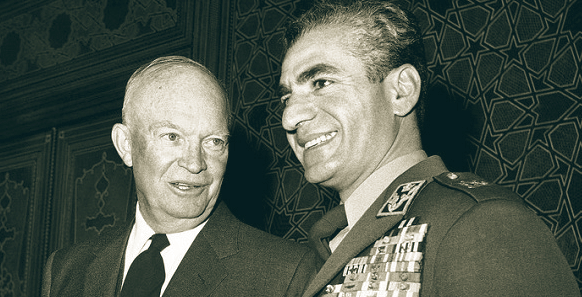
So Eisenhower’s self-effacing style did not prevent him from making at least this one error of judgement. No management style is perfect.
I digress — where was I? Eisenhower’s management style and the book review? Yes, so the chapter that jumped at me had to do with Senator Joseph McCarthy. Greenstein uses the McCarthy threat as an illustration of how Ike’s management style worked.
For any reader who does not recall what the McCarthy threat was, here is a quick recap. Joseph McCarthy was a junior Republican Senator from Wisconsin who served from 1947 to 1955. When he served in the Army Air Corps during WWII, he became known for his dishonesty, for example, lying about the number of missions and their danger flown so that he would be awarded the Distinguished Service Cross, and lying that an injury was incurred in combat (and not at a party) in order to be awarded a combat service medal. There was more, but I think you get the idea.
In February of 1950 he gave a speech where he claimed “I have in my hand a list of 205 Communists who are currently working in the State Department.” Although a total fabrication, this brought him a great deal of national attention. He continued to attract attention for accusing diplomats, Federal employees, actors, musicians, politicians, and others of being either members of the Communist Party, Communist sympathizers, unpatriotic, or homosexuals. These accusations, made significant by his position as a US Senator, were almost all groundless; the victims were innocent, but in many cases it cost them their jobs and their reputations. Nonetheless, the ongoing extreme national fear of Communism caused McCarthy to rise to the top of national attention, and he was popular in his home state of Wisconsin for “rooting out” those evil Communists. He generally was disliked by the other Senators.
I recommend you watch the PBS documentary “McCarthy: Power Feeds on Fear,” on PBS, AppleTV, and PrimeVideo in order to get more context on this important historical event.
When Eisenhower took office in January 1953, McCarthy was a big problem, as he was dividing the Republican voters, hurting innocent Americans, and sowing fear throughout the country. What to do? Ike’s predecessor in the Oval Office, Truman, had tried confronting him directly, an approach that had not worked as it only brought public attention to the fear, amplifying it.
Greenstein says that, per an entry in Ike’s diary, McCarthy became newsworthy “… by being outrageously brazen and extreme in his accusations and insisting that he had firm proof of them he goaded other national leaders to taking him seriously and hence engaging in attention-getting debates with him.” Ike’s style was “the ‘indirect approach’ of reply — criticism of an adversary’s policies or actions phrased as an abstract statement of his own views, while studiously avoiding derogatory personal references“. (I added the emphasis.)
For the undocumented accusations of disloyalty, Eisenhower replied by setting up a series of measures of his own that would legitimately identify and dismiss any Federal employees who were actually disloyal. Eventually, this worked, as the country began to realize that Eisenhower’s strategy was getting rid of the real Communists or other disloyal Americans, while McCarthy was just hurting people. But it took time, and meanwhile, people were getting hurt.
And from Eisenhower’s diary during the initial months of Ike’s first term in office: “I really believe that nothing will be so effective in combating this particular king of trouble-making as to ignore him. This he cannot stand.“

The hidden-hand approach finally bore fruit in April 1954 when President Eisenhower was able to compile evidence against McCarthy that he knew the public would not stand for. McCarthy had been unethically – and illegally – pressuring the Army to give favorable treatment to G. David Schine, who, along with Roy Cohn, was a McCarthy aide and staffer. As WWII had just ended, the public had high regard for the Army and looked askance at anyone who would take advantage of it. Ike, through his influence with Congress, senior members of the Army, and his own Cabinet, privately shared this information with Army brass who then convened a series of hearings about the affair. The hearings were televised live on TV nationally, and the public could see for themselves that McCarthy was undermining the beloved organization that had just defeated the Nazis, and lying through his teeth.
McCarthy never recovered. His career in the Senate ended the following January, and he died two years after that.
Eisenhower is not generally credited for bringing McCarthy down, but this was because he kept his role quiet. It was not his intent to win by calling names, but rather to arrange actions truthfully and in a way that achieved his goals. He played the long game, never resorting to personal attacks on his political opponents.
I want to go back to one aspect of the above story. Remember that I mentioned a Roy Cohn, lawyer and aide to McCarthy? It was Cohn who devised the aggressive and dishonest strategies that thrust McCarthy into the public spotlight. Some of you will know where this is going…. guess who else was advised and counseled by Roy Cohn? In addition to serving as lawyer and mentor for a variety of New York organized crime bosses, Cohn’s favorite client in the 1980s became none other than Donald J. Trump. At that time, Trump was a young and not yet successful outer-Borough real estate broker. Trump considered Cohn his most critical teacher and advisor, who taught him how to be tough in order to get what you want.

Roy Cohn’s three keys to success that he taught both Senator McCarthy and Donald Trump were: 1) Never admit fault; 2) always attack; and 3) being successful meant dominating the other person. (Note the contrast with Ike’s hidden-hand strategy.) These keys to success appear to have stuck with the students in both cases. In 1986 Cohn was disbarred for unethical conduct (he tried to defraud a dying client by changing his will to leave his estate to Cohn), and died a few weeks later of aids while denying that he was HIV-positive.
I’m sorry I led you down a side street on the Roy Cohn thing, but he is critical in understanding what Eisenhower was up against, and how Ike’s long game of not pouring gasoline on his opponent’s need for attention eventually worked.
There is one more chapter to this book review. I purchased this book as a used paperback on Amazon for $11.46. A bargain indeed. As a bonus, it came with the highlighting and marginal notes of the previous owner. Here is a photo of a representative page:
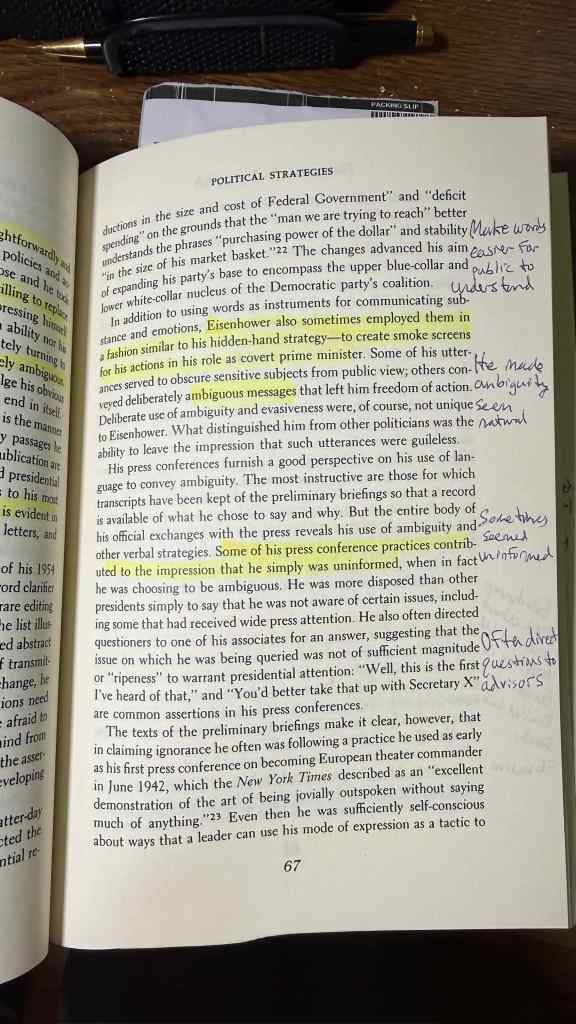
I spent my time reading the book thinking about the previous owner. Most likely it was a student who was assigned this book in some sort of history or political science class. Undergraduate or Graduate University coursework? I’m not sure.
So I asked ChatGPT to suggest in what specific courses students are assigned this book, and to list its sources. It came back with a Rutgers course 01:790:306 “American Presidency.” The overall course description fit well with the themes of the book. -306 appears to be an upper-level undergraduate or graduate Political Science course. However, when I pulled up the actual syllabus, Greenstein’s book was not included. I have apparently confirmed that AI chatbots can make stuff up. Who knew?
Thinking this might be a one-off, I checked a second reference from ChatGPT, Poly Sci course 3110-01 at the University of Utah. Same result here, believe it or not. The detailed syllabus made no mention of this book as part of the required course reading.

I guess I will have to leave the specifics of the prior owner as an unsolved mystery.
My overall sense after reading “The Hidden-Hand Presidency” is that we should amend the Constitution to separate out the role of Head of State from that of Prime Minister. Does this violate your sense of “No Kings” in America? I can understand if it does. But having the Prime Minister elected from their own by members of Congress would eliminate the circus that we currently are dealing with regarding Presidents running for election for six years prior to when they are actually elected. And it would bring focus back where it belongs, to the power Constitutionally invested in Congress, which the people have the power to elect.
Would this work? Could the US make this sort of a change? Probably not, but at least it gets at one of the root causes of current problems. We are an aspirational nation, and this is an aspirational goal. Happy 250th birthday America!


