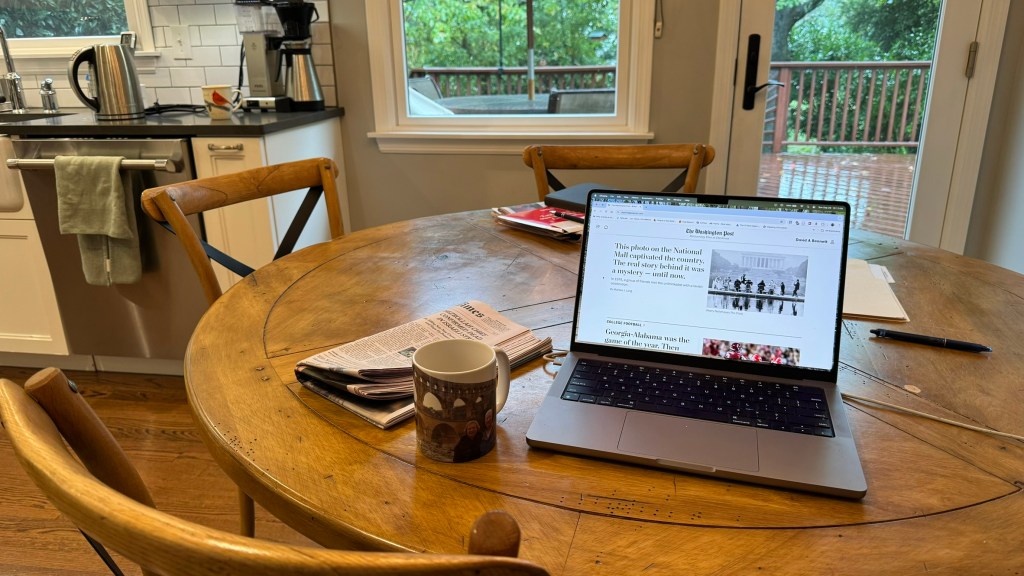
I write this blog to highlight and discuss things that I read in the news. My morning routine typically comprises coffee, the Washington Post, more coffee, the UK Guardian, a refill?, Google News, perhaps just one more mug of java, the NY Times, and then chasing threads in the news wherever they might lead. Did I mention coffee? Today’s chasing of threads led me to the topic of assisted suicide and in particular a report that a 64-year old American woman traveled to Switzerland for this purpose, where it is legal. Evidently in this case not legal enough, as some of those who were with her at the end have been arrested by the Swiss authorities.
Here is my setup:
This next part reveals things about the movie Soylent Green. If you have not seen this film and would rather watch it yourself, then you should probably stop reading. However, I promise not to reveal the surprise ending in this blog.
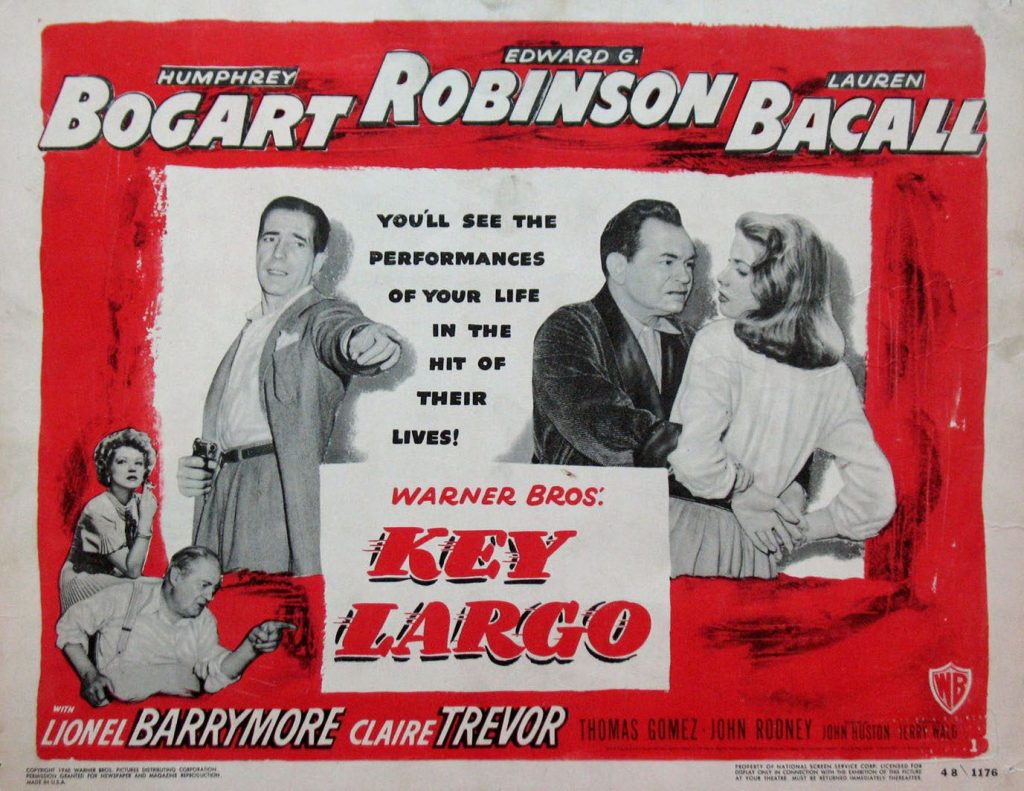
Soylent Green is a 1973 movie about a police detective, played by Charlton Heston, and his research assistant played by Edward G. Robinson. It is set 49 years in the future in 2022 New York City. Living is a nightmare because of global warming; no one has enough food, there is not enough water, it is always too hot, public services have broken down, everything is polluted, the wealthy few exploit everyone else, and the population has exploded. All because burning fossil fuels have created a blanket of carbon dioxide that has turned the planet into one big greenhouse. (Fortunately, this part of the movie plot is pure fiction.)
Heston gets the assignment to look into the murder of prominent citizen William Simonson, who turns out to have been a member of the board of the Soylent Corporation. The Soylent Corporation is the only source of food for the entire population of earth; they process plant proteins like soybeans and lentils (hence the name) and sell them as a nutritious and complete food source. As the movie opens, the Soylent Corporation has just released a new variety, ‘Soylent Green,’ made from ocean plankton and apparently a big improvement over the two existing products, Soylent Red and Soylent Yellow.
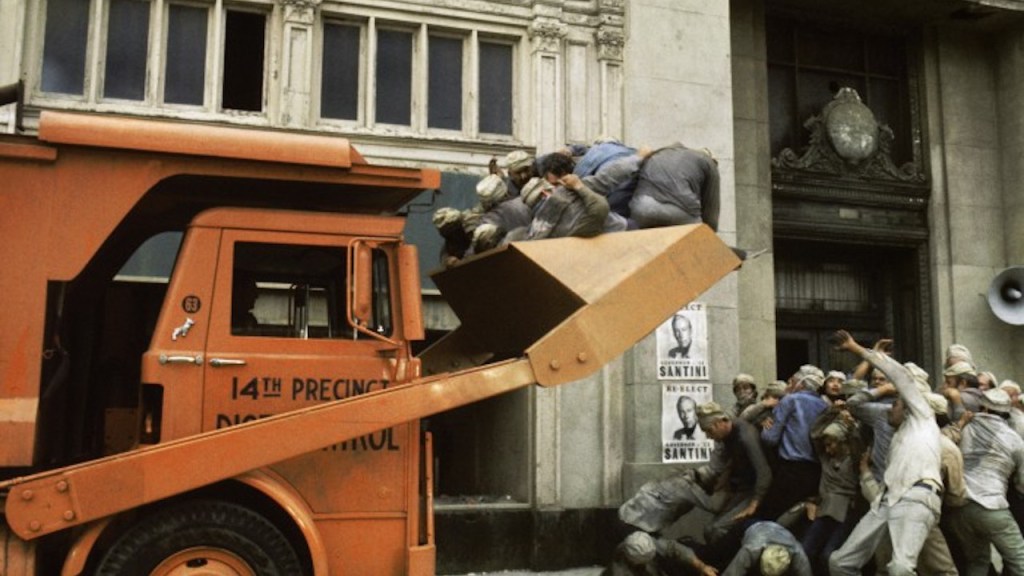
Most of the film is spent by Heston and his assistant Robinson figuring out who killed Simonson and why. I will let you watch it yourself to find out the answer, revealed in the final scenes.
As the movie draws to a climax, Robinson finally understands how bad things really are and avails himself of corporate-sponsored euthanasia.

In exchange for a few minutes of experiencing the pre-dystopian world, the Soylent corporation relieves you of your horrible and hopeless life. They play Tchaikovsky’s Pathetique Symphony No. 6, Beethoven’s Pastoral Symphony No. 6, and Grieg’s Morning Mood, and show pictures of flowers, gardens, and unspoiled meadows. I was so moved when I first saw this scene that I have since not been able to hear Beethoven’s Pastoral without thinking about euthanasia. I can’t say that this has been entirely good, but it has happened and I can’t go back. Here is a performance of this piece, in its entirety should you want to listen and think about whether you would give up your life in exchange for experiencing nature:
In a touch of sadness, while filming this movie Edward G. Robinson knew that he had just been diagnosed with terminal cancer. This was his last film; he did not tell anyone involved about his illness, and he died shortly following the making of the film.
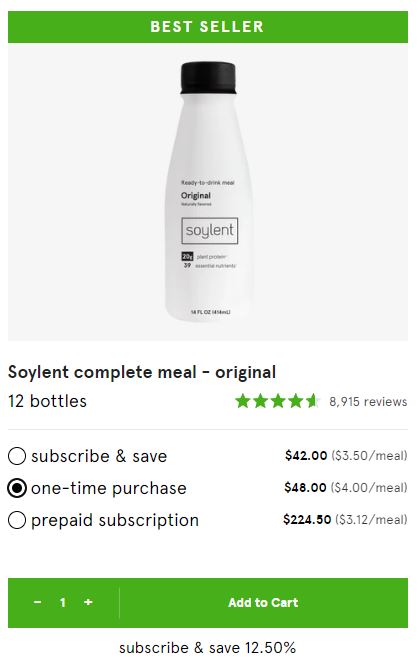
In a development which I can only describe as bizarre, a silicon valley guy named Rob Rhinehart mixed 35 chemical ingredients, which he had read about in biology textbooks, into a drink that he hoped would be a complete source of food. According to Wikipedia, he thought eating normal food was a waste of time and money, and after trying this out on himself, started a company to sell it as an alternative to what we normally consider to be food. He claimed that he was just as healthy, did not need to waste the time to sit down for meals, and cut his food bill by two-thirds. You can now buy this product, branded as — wait for it — Soylent Nutrition. He thought the connection to the dystopian movie would attract customers.
Getting back to assisted suicide, the news item that caught my attention concerned an invention by a Australian physician and assisted suicide advocate Philip Nitschke, founder of the non-profit group Exit International. He called it the “Sarco Pod,” suggesting the word sarcophagus. This was a news item 3 months ago when the Swiss Government was reported to have approved it for use in their country, with restrictions. It looks like one of those things that you get into in a sci-fi movie so that you can undergo suspended animation or hibernation for, say, 100 years, then be revived as good as when you went in. For example, the movie “Passengers” with attractive young people Chris Pratt and Jennifer Lawrence features these:

In the Sarco Pod, you get in and then are required to push a button so that it is clear that this is something you chose of your own volition. At which point the air inside the pod is replaced with nitrogen, and you feel a little euphoric for perhaps a minute, then become painlessly unconscious, and then within 5 or 10 minutes, you are gone.
That was last July’s news. Today’s news is that a 64-year old American woman flew to Merishausen, Switzerland (right on the northern border with Germany in a lovely wooded area) to try the thing out. And it worked! However, others involved were promptly arrested by the office of the Prosecutor for Schaffhausen Canton. Cantons in Switzerland are like states here in the US.
In Switzerland there has been a long history and tradition of allowing those with a terminal illness to make their own decisions about leaving the world. The Swiss Criminal Code of 1937, for example, allows it unless those assisting have a “selfish motive.” This means that family members subject to inheritance cannot be involved in the activity, nor can a person take a fee from the patient for helping them. The Swiss law has two parts:
1) There can’t be a selfish motive, and 2) The ones helping the patient can’t actually perform the activity that causes death.
So the scenario in Soylent Green where Edward G. Robinson pays workers at a corporation to put him under with a huge smile on his face would not be legal for two reasons, one of which has to do with agency on the part of the patient, and the other relates to the secret surprise ending – which I have not revealed! It is getting harder and harder to hold back as this essay progresses.
The Swiss have had public referendums on assisted suicide and consistently approved it. They generally trust that the process will not be abused. As a result, there are a number of non-profit organizations in the country (the two largest are Exit and Dignitas) that offer to help those who are ready to go, usually in the face of a terminal illness. You pay an annual fee to join one of these along with annual dues, and then typically there is no cost when you avail yourself of the service. Switzerland, unlike many other countries, does not require a physician to be in attendance if one of these organizations is involved. You still need to be screened in order to avoid abuse, including a waiting period, two independent medical opinions, two oral and one written statement of intent and reasoning, and so on. A report must be filed with the authorities afterwards, and non-compliance with the guidelines can result in jail or a fine.
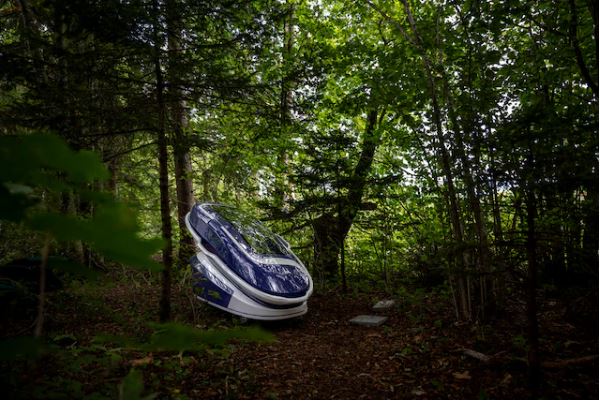
The American woman in Merishausen was assisted by an organization called ‘The Last Resort,’ established specifically for the Sarco Pod, and whose director, Florian Willet, was present in accordance with Swiss law. This was the first time that the Sarco Pod had been used, and Swiss authorities had not declared it to be illegal, nor had they determined it to be a medical device, no one gained financially, the woman had been evaluated by two physicians, and had signed appropriate statements of intent. The Last Resort appears to have followed the country’s rules.
The Canton authorities are claiming that the device does not meet Swiss product safety requirements. I will see how things develop, but no, it is clearly not a ‘safe’ product given its purpose. How could it be?
What about closer to home? I live in New Jersey, the Soprano State, and it turns out that assisted suicide is also legal here. Who knew? A State Law, the New Jersey Medical Aid in Dying for the Terminally Ill Act (“the Act”) recently went into effect in August of 2019.

Although we don’t have non-profits set up for the purpose of helping people implement the Act, the law is pretty specific about constraints to prevent abuse. A qualified terminally ill patient has to be vetted by two physicians, has to have made a voluntary and informed decision, two oral requests must be separated by at least 15 days, one of the witnesses can’t be related to the patient or stand to gain by the death or be an employee of the facility where the patient lives, and so on. The patient has to personally take the action that ends their life, like pushing the syringe plunger. The state program is called “Medical Aid in Dying,” or MAID. In 2023, there were about 100 patients who used this law to take their own life, all of whom met the relevant criteria.
This is a topic that is difficult to think about, no less discuss publicly. There are situations where I believe most Americans would agree that “ending it all” is appropriate. For example, a person with a terminal condition who will not last much longer, whose quality of life is terrible, who is in pain, whose family is being burdened, and who feels that they have already lived a long and productive live, is in an unenviable position. As long as the person is “ready to go,” and these kinds of conditions exist, then you should be able to make your own choice. However:
We are all afraid of making it too easy. Depression is serious, and a depressed person can feel like there is no point in going on. Does the Sarco Pod make it too easy? It might. Does the easy availability of firearms, a situation unique to this country, also make it too easy? Yes, it does.
According to the Pew Research Organization, the most recent data on gun-enabled suicides in the US is that 54% of gun deaths in 2021, or 26,328, were suicides. That works out to about 72 Americans every day. There have been no deaths from the Sarco Pod. Although gun-enabled murders is at its lowest point since 1974, the gun-enabled suicide rate, after dropping through 2004, is now back up to near its 1974 national peak at 7.5 per 100,000 people. Note that in New Jersey, where gun laws are strict and assisted suicide is legal, we have among the lowest gun suicide rates in the US – ours is 1.9 per 100,000. For comparison, Wyoming’s was the highest at 22.8.
Shakespeare, in one of his most well-known plays, illustrated the perils of making it too easy:

We will need to wait to find out if the Sarco Pod makes it too easy. Meanwhile, the US has a 24/7 national suicide prevention hotline: just dial 988. Someone will answer who can help.
 Grandpa Dave Reads the News